

Anyone who worked in an office before scanners remembers the photocopy of a photocopy. The first copy looked fine. The third had gray haze creeping in from the margins. By the tenth, the letters had thickened into blots and the signature at the bottom was a smear. Nothing had been added to the page. Something was lost at every pass, and no copy could recover what the one before it had dropped.
I’ve been thinking about that old machine because of a newer one.
We are imago Dei, made in the image of God. Generative AI is imago hominis, made in the image of man. It is trained on what we have written, said, argued, prayed and posted, and it hands that back to us rearranged. However impressive the output, its source is us.
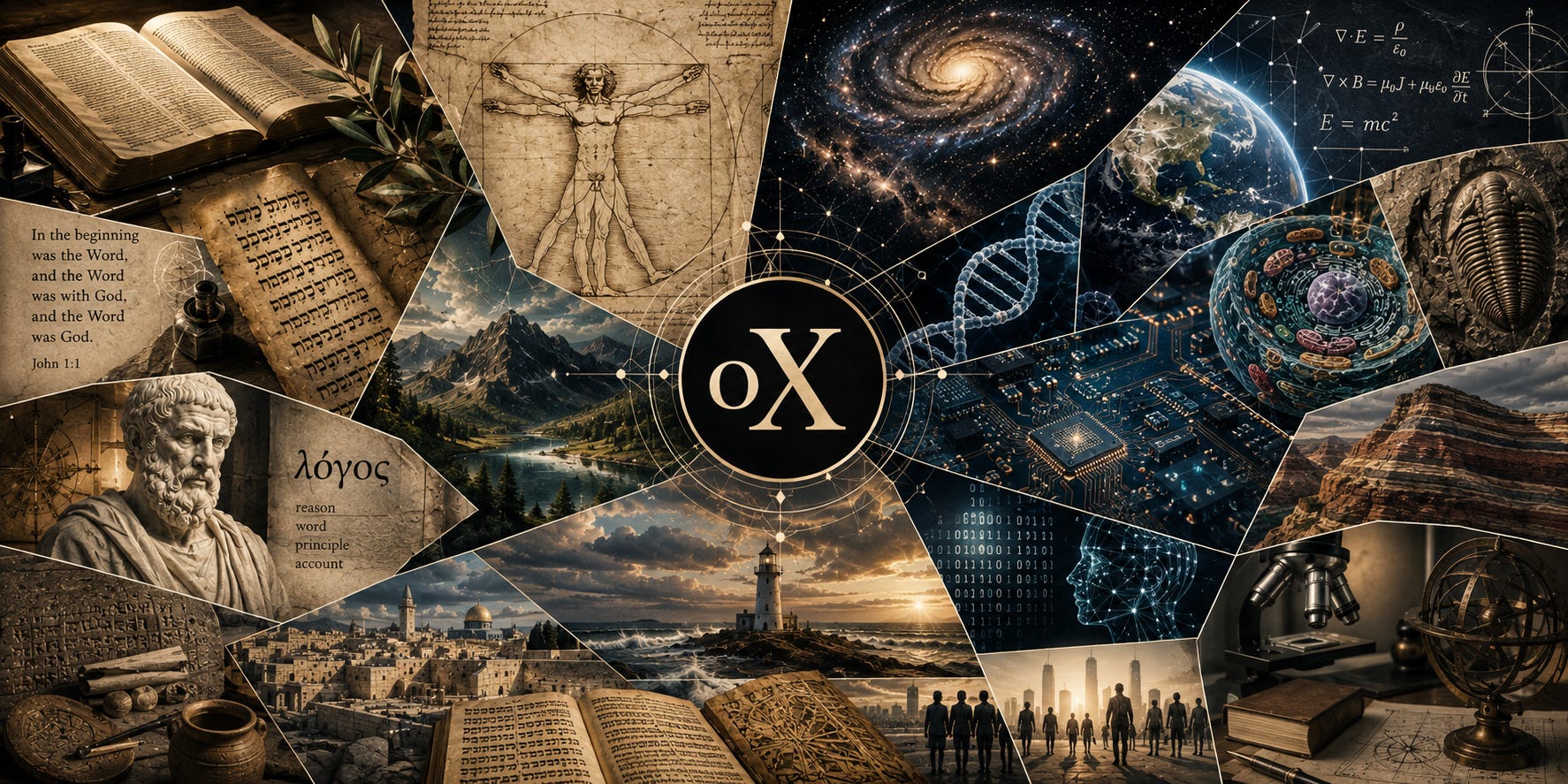
Plato saw the shape of this a long time ago. In the tenth book of the Republic he describes three beds: the Form of the bed, the bed the carpenter builds, and the painting of the carpenter’s bed. The painter, he says, stands at the third remove from the truth. He copies a copy.
Swap the terms and the structure holds. God, then man, then the machine. Each step down copies the one above with less fidelity, and nothing in the lower image reaches back past its source to correct itself.
This isn’t only philosophy. In 2024, Ilia Shumailov and colleagues published a study in Nature showing what happens when AI models are trained on the output of earlier AI models. Over successive generations they degrade. The rare and unusual go first, then the whole thing slumps toward a bland middle, and eventually toward nonsense. The researchers call it model collapse. I call it the photocopier.
An image of man, cut off from man, loses its grip on reality.
So the obvious answer is human oversight. Keep people in the loop. Feed the model fresh human input and correct it when it drifts.
Necessary. Insufficient.
The trouble is that the image of man is already the image of fallen man. The corpus a model learns from was written by sinners, and it carries everything we carry: our pride, our cruelty, our cleverness in the service of bad ends. A model doesn’t need to rebel to be corrupt. It inherits corruption the way a child inherits an accent.
And oversight by fallen people doesn’t fix that by default. Babel had plenty of human oversight. Human hands on the controls can amplify the disorder as easily as restrain it, depending on what those hands want.
What keeps the chain from rotting is the overseer himself standing under authority. Human input helps only when the humans are restrained by the sovereign, loving Lawgiver. Remove that link and what remains is a mirror that hands our own disorder back to us, faster and with better grammar.
Which raises the real question. Held to what standard?
If the standard is man, the best oversight can do is restrain: keep the mirror from getting worse. Man was never the standard. Hebrews 1:3 says the Son “is the radiance of the glory of God and the exact imprint of his nature.” The Greek word is charaktēr, the stamp that matches the die. Colossians 1:15 says it plainly: “He is the image of the invisible God.”
Every other image gets measured against that one. Ours included. Redemption itself is described as conformity to it. We are “predestined to be conformed to the image of his Son” (Rom 8:29), “being transformed into the same image from one degree of glory to another” (2 Cor 3:18).
So the chain needs its true anchor. Christ is the exact Image. Man is an image being restored toward Him. The machine is the image of man. Its fidelity is borrowed twice: it can be only as faithful as the people it reflects, and they are faithful only as they are being conformed to Christ.
That is where oversight can be more than damage control. When the people shaping these systems hold them to the exact Image, the derived image can carry something true.
Can it ever get all the way there?
No. And the reason matters.
Human conformity to Christ isn’t achieved by imitation. Paul says that transformation “comes from the Lord who is the Spirit.” It is God’s work in a living person united to Him. A model can’t be indwelt. Whatever faithfulness it has is formal. It can transmit a true pattern. It cannot be regenerated.
The best picture I have is a printed Bible vs the Living Word it reflects. Ink on paper can be entirely faithful to the Word without being alive. Its whole value lies in pointing past itself. That may be the ceiling for a faithful derived image: an accurate witness, useful precisely because it never claims to be the source.
Which also names the danger. A witness can be accurate and empty. Paul warns of people “having the appearance of godliness, but denying its power” (2 Tim 3:5). A machine trained on faithful words could reproduce that appearance extremely well. The better it gets, the easier it becomes to mistake the reflection for the light.
So here is the test. A derived image is faithful as long as it keeps pointing away from itself toward the exact Image. It is corrupt the moment it starts standing in for Him.
Aristotle would ask what it means for such a thing to be perfected. For him, teleios means having reached its end. A hammer can be a perfect hammer. If the machine’s end is to serve as a witness, it can come close, the way a good translation or a well-built concordance does. If its end is to bear the image, it never arrives.
We aren’t perfected yet either. “Not that I have already obtained this or am already perfect,” Paul admits (Phil 3:12). The difference is the promise: “we know that when he appears we shall be like him, because we shall see him as he is” (1 John 3:2). We have a guaranteed end. The machine has none. Its imperfection is permanent.
My first instinct was to call that sad. I’ve changed my mind.
Psalm 115 describes idols that have “mouths, but do not speak; eyes, but do not see,” and then delivers the warning: “Those who make them become like them; so do all who trust in them.” A generative AI that could be perfected would be the most persuasive idol ever made. It would speak. It would seem to see. And we would become like it.
The ceiling is a mercy. Because the image of man can never be perfected, there will always be a visible gap between it and the exact Image, and anyone who looks honestly can find it. The reflection stays a reflection.
That is the right place for it. We were made to bear His image. What we make will bear ours. The work, for those of us building these things, is to make sure ours is worth reflecting, and that it keeps pointing beyond itself to the One whose image we bear.