

Nobody asked women if they wanted the deal before they signed it.
That’s the thing that gets glossed over in every retrospective celebration of the feminist revolution. The story gets told as liberation: as women finally breaking free from the prison of domesticity and entering the world of real consequence. Aprons exchanged for briefcases. Kitchen tables swapped for conference tables. Progress, obviously. Who could argue with progress?
But a trade is only a good deal if you know what you’re giving up. And the feminist movement, from its earliest articulations through its present ideological terminus, was remarkably incurious about that question.
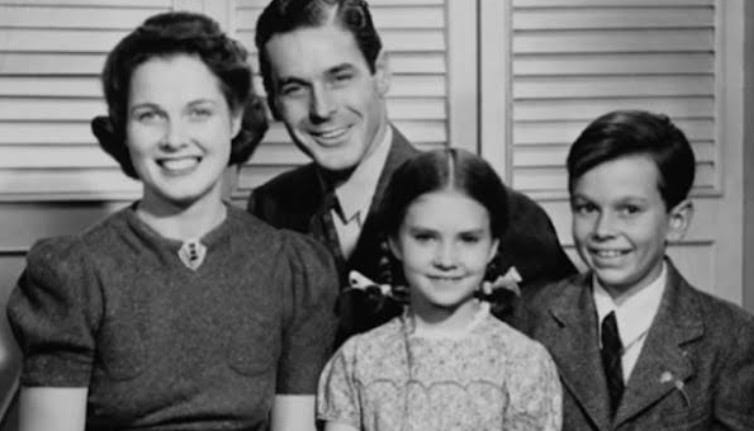
Start at the beginning, before it becomes comfortable to dismiss this as anti-suffrage nostalgia. The right to vote isn’t the issue. Civic participation, legal equality, protection from genuine abuse of power. These are not the problem. Nobody serious is arguing that women should be disenfranchised. But the suffrage movement didn’t stop at the ballot box. It was always a trajectory, not a destination, and the trajectory had a direction baked in from the start: away from the domestic, toward the institutional; away from the relational, toward the transactional; away from what women distinctively were, toward what men had historically occupied.
The problem wasn’t that women entered public life. The problem was the implicit premise underneath the project: that public life was where significance lived, and that everything outside it was a consolation prize.
Betty Friedan named “the problem that has no name” in 1963 and located it in the home. The suburban housewife, she argued, was suffocating, her potential unrealized, her identity dissolved into husband and children. The solution was obvious: get out. Get a career. Get a self.
G.K. Chesterton had seen this coming thirty-six years earlier. Writing in 1927, he identified the conceptual knot at the center of the whole project: feminism, he wrote, “is mixed up with a muddled idea that women are free when they serve their employers but slaves when they help their husbands.” That’s not a quip. That’s a diagnosis. The movement couldn’t conceive of domestic labor as anything other than bondage, because it had already decided that the only real freedom is institutional, credentialed, and compensated. Once you accept that premise, the housewife is by definition unfree, not because her life is actually constrained, but because the framework rules her out before the argument starts.
What Friedan didn’t ask (couldn’t ask, given the framework she’d already accepted) was whether the problem she diagnosed was actually the home, or whether it was the broader cultural devaluation of the home that had already been underway for decades. She identified the symptom and blamed the patient.
Here’s what the trajectory has produced, empirically.
Women are more educated than men by nearly every metric now. They outnumber men in colleges and graduate programs. They have entered virtually every professional field. By the movement’s own stated terms, this should register as flourishing.
Instead, women report higher rates of depression, anxiety, and loneliness than at any point in recorded measurement. The happiness gap between men and women has inverted since the 1970s; women are now consistently less happy than men, a reversal from the pre-feminist baseline. Delayed marriage, declining fertility, rising rates of what researchers delicately call “deaths of despair.” These are not the metrics of a successful liberation.
You can argue about causation. Fine. But the movement that promised to make women’s lives better cannot simply ignore what happened to women’s lives after the deal was made. It has to account for it.
The Logos doesn’t leave us without framework here.
When Genesis says that God created humanity male and female in His image (imago Dei), it isn’t making an interchangeable claim. The distinction matters. It was declared good before the fall. The differentiation isn’t a consequence of sin; it’s a feature of design. And design implies telos: purpose, direction, the kind of thing a thing is for.
The feminist project, in its deepest commitments, is a telos-denial project. It insists that the differences between men and women are culturally constructed, that the roles historically associated with femininity are impositions rather than expressions, and that authentic selfhood requires their rejection. This isn’t an empirical claim. It’s a metaphysical one. And it’s in direct conflict with the metaphysics of creation.
The Logos-ordered cosmos doesn’t place women in the home as a punishment or a limitation. It places nurture, cultivation, and relational formation at the center of human community and gives women a particular aptitude and calling toward those things. That isn’t a ceiling. It’s a vocation.
And notice what that vocation actually contains. Proverbs 31, the Bible’s own portrait of excellent womanhood, describes a woman who makes linen garments and sells them, delivers sashes to merchants, considers a field and buys it, plants a vineyard with the proceeds, and perceives that her merchandise is profitable. This is a woman with real economic agency, real commercial activity, real market engagement. Scripture never foreclosed any of that. What it does is locate all of it inside the household’s flourishing rather than in flight from it. She isn’t escaping the home to become a merchant. She’s a merchant because she’s a homemaker, and a remarkable one.
What the movement did was take a vocation and relabel it a cage.
Someone will raise the exception here. There are women who thrive in careers, who find genuine meaning in professional achievement, who are not built for the domestic axis. Granted. Exceptions exist in every design pattern. They don’t refute the pattern; they locate its edges.
The design argument isn’t that every woman must be a homemaker or that no woman can flourish in a boardroom. It’s that the movement took the exception and made it the rule, took the outlier and built an ideology around her, and then handed that ideology to every woman as if it were a map to freedom. Women who wanted homes and children and relational depth were left holding the old map and told it led nowhere.
That’s the inversion. That’s the trade.
The bedsheets matter. Not as a symbol of submission, but as a symbol of the intimate, the embodied, the creaturely. The work of a home (the making and sustaining of a household, the formation of children, the cultivation of a marriage) is not lesser work. It is, by any honest accounting, harder and more consequential than most of what happens in most office buildings.
The spreadsheets matter too. Serious work, institutional engagement, professional excellence: none of that is forbidden or even discouraged by a Logos-grounded anthropology. The question is what gets framed as the default, what gets treated as the destination, and what gets quietly demoted to the category of consolation.
Scripture had both all along. The Proverbs 31 woman makes the bed coverings and sells the linen. She tends the household and negotiates with merchants. The false binary was never in the text. It was invented by a movement that needed domesticity to be a prison in order to sell the liberation.
Modern feminism answered those questions in one direction, decisively, and did so without honest accounting of the costs.
So here’s what I’m not saying. I’m not telling you what to choose. You’re an adult, made in the image of God, with the genuine capacity to weigh your own life and calling before Him. That’s not mine to adjudicate.
What I am saying is that the choice was never presented honestly. The trade was sold, not offered. The costs were hidden, not disclosed. And a generation of women, many of them quietly and privately, are starting to notice the gap between what they were promised and what they got.
The design is still there. The telos hasn’t been revoked. The vocation didn’t expire.
What was lost can be found. What was traded can, at least in part, be reclaimed.
That’s not nostalgia. That’s hope grounded in the nature of things.
The Logos-ordered world is not a world of imposed limitations. It is a world of given purposes. The question is never whether to have a purpose, but whether to receive the one that fits.